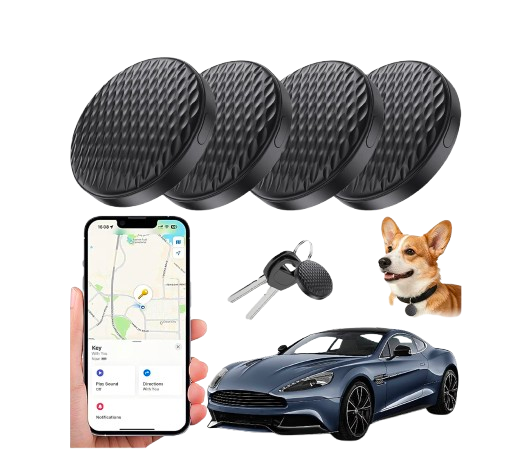
GPS Tracker For Vehicle
What Is a GPS Tracker for a Vehicle?
A GPS tracker for a vehicle is a compact electronic device that uses satellite positioning technology to determine a vehicle’s location. Depending on the model, it may also provide real-time tracking, route history, speed information, geofencing alerts, and other useful vehicle-monitoring features through a mobile app or web platform.
How It Works
The tracker receives signals from GPS satellites to calculate the vehicle’s location. It then sends this information through a cellular network or another communication method to a connected smartphone or online account. Some models provide live location updates, while others record and upload information at set intervals.
Main Benefits
A vehicle GPS tracker can help you monitor location, review travel routes, receive movement alerts, and improve awareness of how a vehicle is being used. It can also be useful for managing family vehicles, business fleets, or valuable vehicles.
Key Features to Consider
Important features include real-time tracking, accurate location updates, geofencing, route history, speed alerts, tamper notifications, cellular coverage, waterproof construction, and app compatibility. Battery life is especially important for portable trackers, while wired models should offer reliable installation and power management.
Where You Can Use It
GPS vehicle trackers can be used in cars, motorcycles, vans, trucks, delivery vehicles, and other compatible vehicles. Businesses may use them for fleet monitoring, while individual owners may use them for location awareness and vehicle management.
Battery and Charging
Battery-powered trackers are generally easy to install and can be moved between vehicles, but they require periodic charging. Hardwired trackers can receive continuous power from the vehicle and usually need less routine charging. Actual battery life depends on the device, update frequency, network connection, and usage conditions.
Ease of Use
Most modern trackers are designed for straightforward setup through a smartphone app or online dashboard. A portable unit may simply need charging and activation, while a hardwired tracker may require professional installation. A clear app with simple location and alert controls can make everyday use more convenient.
Maintenance Tips
Keep the tracker charged when necessary and check that it maintains a reliable network connection. For hardwired devices, occasionally inspect the installation and wiring. Keep portable units protected from excessive heat, moisture, and physical damage, and update the companion app or device firmware when updates are available.
Pros and Cons
Pros: Real-time or periodic location tracking, route history, security alerts, geofencing, and useful vehicle-management information.
Cons: Some models require a subscription or cellular service, battery-powered units need charging, and tracking performance can be affected by weak network coverage or signal obstruction.
Who Should Buy It
A GPS vehicle tracker can be useful for vehicle owners who want location awareness, families managing multiple vehicles, businesses operating fleets, and people who need basic monitoring or travel-history features.
Final Thoughts
A GPS tracker for a vehicle provides a practical way to monitor location and vehicle activity. When choosing one, focus on tracking accuracy, network coverage, battery or power options, alert features, app quality, installation requirements, and any ongoing subscription costs.



Reviews
There are no reviews yet.